



.jpeg)

Goodbye, SaaS. Welcome, SaiS.
Tom Humphrey on why the SaaSpocalypse gets it half right and why the most interesting companies have never fit neatly into a category.
AI isn't new to the best software companies. The panic is.
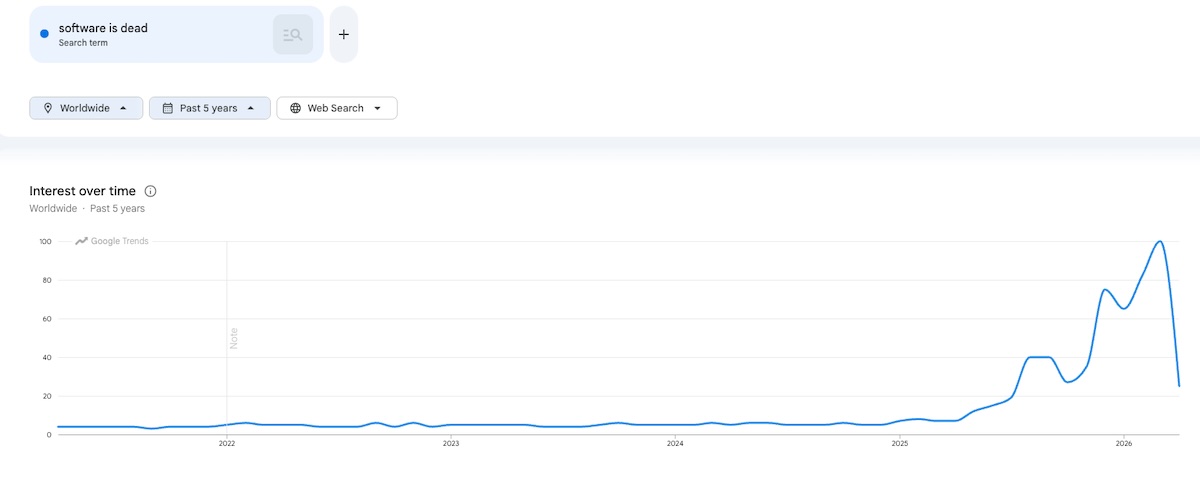
If I could get $1 for each time I’ve been asked "what does AI mean for SaaS?"...
For decades, software has been the most attractive business profile for investment. High gross margins, fast and scalable growth, natural seat-based pricing expansion.
And yet, almost overnight, the party stopped. A new product drops, someone decries the “SaaSpocalypse”, and the panic sets in.
Like most apocalyptic framings, the drama is equal parts useful and misleading. Useful, because the disruption that AI poses to traditional SaaS economics is real and worth taking seriously now. Misleading, because it implies passivity, as though SaaS companies are sitting idle and unable to respond.
In the first innings of AI, it was easy to bucket companies. You were either an AI company (Anthropic, OpenAI) or a software company (Canva, Salesforce). The categories were clean because the technology was still arriving.
But as we enter the second innings, these categories feel artificial. AI companies are shipping software and traditional software companies are building at the model layer. As Niki Scevak recently put it, “there are no SaaS companies, and there are no AI companies.”
The survivors will just be companies.
SaaS → SaiS
In 2024, I wrote about how AI was unlocking a new form of company dubbed SaiS, or “AI-enabled SaaS”. Not because the world needed another acronym, but because we needed a better way of describing what was actually happening.
The problem with the SaaSpocalypse framing isn't that it's wrong; it's that it's binary. AI companies or SaaS companies. Winners or losers. Disrupted or safe. Markets love a clean categorisation, but it isn’t that simple.
Two years on, the framework holds. The fear doesn't.
That’s because the fear is running ahead of the evidence. Take the idea that enterprises will vibe-code their own operating systems and strip third-party software from their tech stacks entirely when reality shows they have never been effective at maintaining non-core technology. Or a future where there are no software engineers when the reality is we have more developers today than ever before and hiring demand appears insatiable.
The markets are right about the tides of change and the urgency to innovate, but they appear to be applying a broad brush to something that is anything but uniform.
No two companies are affected by AI in the same way. The depth and speed of disruption to a company’s product and market, and a company's ability to respond and innovate vary enormously.
The 4 stages of SaiS
This month, Xero’s CEO resurfaced the concept of SaiS while sharing that “we aren’t witnessing the end of SaaS, but an evolution into the highest-alpha version of itself”.
And she’s right. A clearer picture is starting to emerge of four stages of approach that companies are taking to become SaiS companies.
Stage 1: Integration
A company incorporates AI models off-the-shelf via API into its software in ways that find strong “feature market fit” and genuinely improve the user experience - not cosmetic, not for the headline, but for a meaningfully better UX which in turn opens up customers’ willingness to use and pay. Most AI-enabled software companies are here. It's a legitimate first move and no easy feat, but also replicable, and long term differentiation has to come from somewhere else.
Stage 2: Orchestration
Leading AI companies such as Ivo and Lorikeet invest heavily in engineering around the edges of base model architectures to get better performance for customers in terms of cost, speed/latency, and outputs. It involves techniques such as data/context structuring, prompt engineering, api / model routing, output optimisation, and model evaluations. It’s the kind of work that doesn't make for good LinkedIn posts but makes for extraordinary products that deepen the gap to competition.
Stage 3: Post-Training
Post-training moves companies from engineering around the edges of models into enhancing the models themselves, using techniques such as supervised fine-tuning on proprietary data sets, model distillation, quantisation, and reinforcement learning. Here companies begin to own their destiny and build something that looks like sustained differentiation. Post-trained models are generally faster, cheaper, and purpose-built for specific tasks - whether that be transcribing a doctor’s patient notes (Heidi), powering search in ecommerce (Marqo), or generating the kind of varied creative output that generalised models struggle with (Springboards).
Stage 4: Training
The ultimate stage has companies entering into the pre-training process, and developing their own foundational models. In Australia, Leonardo AI, now part of Canva, has trained its own models from scratch including Phoenix and Lucid Origin. Meanwhile, Harrison AI has developed its own foundational models in healthcare off the back of proprietary radiology data.
The SaiS journey
Canva is the gold standard of a company transforming from SaaS to SaiS at scale. When the first text-to-image models dropped, Canva had them live to all users globally within six weeks and hit Stage 1 of SaiS. That wasn't luck. Five years earlier, the company had acquired a company called Kaleidoscope in Austria, which became the backbone of its machine learning team and its early AI features (eg. background remover). Canva's culture was already built for rapid product innovation - a business that runs on six-weekly product sprints, epitomised by its Canva Create event today.
By late 2024, Canva acquired Leonardo AI and moved firmly into Stage 3, when Leonardo was fine-tuning open-source models. It is now training its own image and design foundational models (Stage 4) that have excelled by global standards.
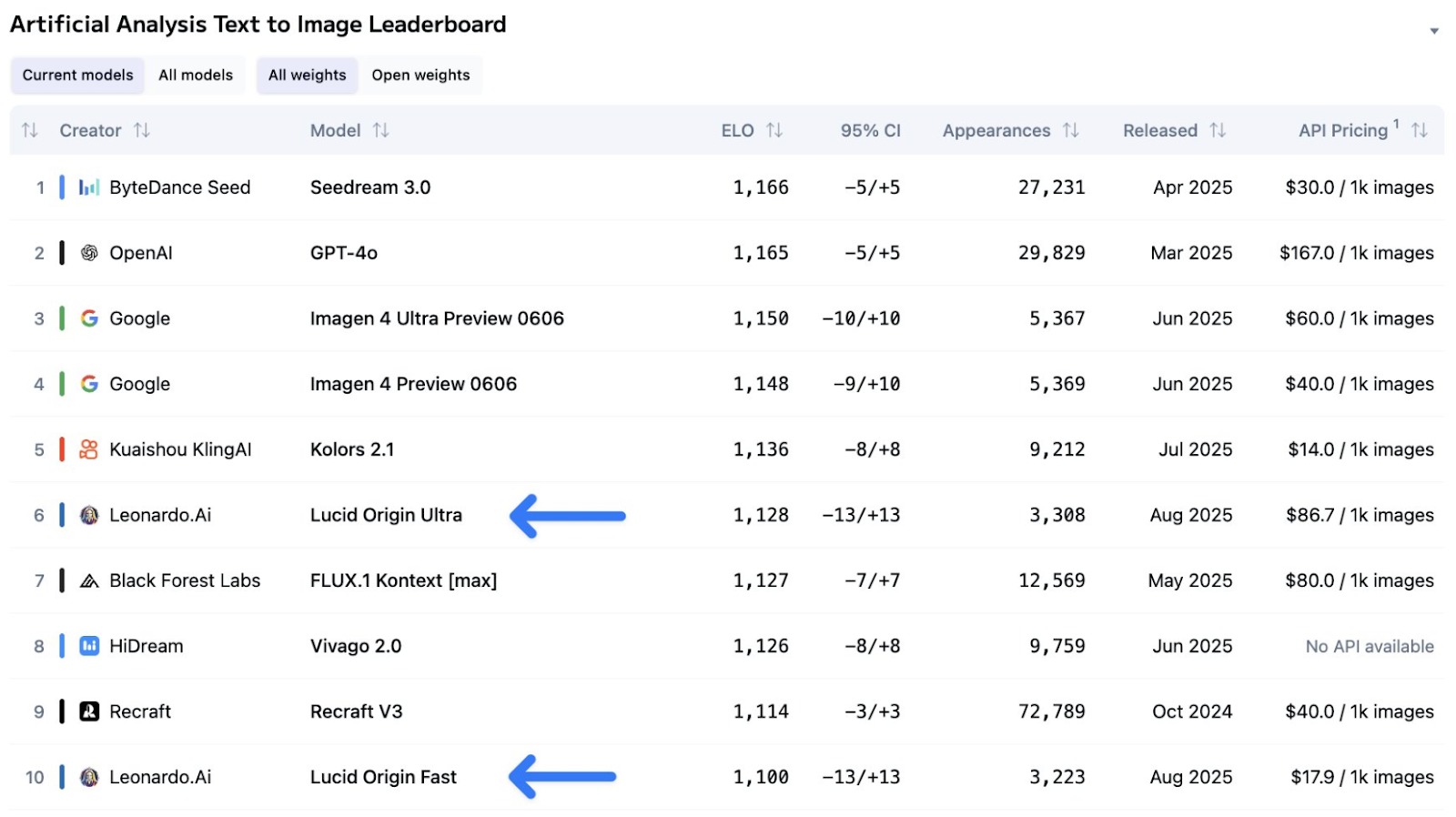
Today, Canva's AI tools have been used over 24 billion times, placing it third among the most used consumer generative AI tools globally behind only ChatGPT and Gemini.
At an earlier stage is Springboards, who this week announced the release of Flint Alpha, a 30 billion parameter model trained specifically for creative use cases that demand variation and blue-sky thinking. Generalised models, optimised for determinism and built for coding and nailing physics exams, simply can't deliver on this.
With this, Springboards leaps into Stage 3 of SaiS, joining a cohort of other Australian homegrown companies known to have publicly released proprietary models - Canva, Leonardo, Harrison, Marqo, and Unsloth.
To be clear, while the stages demonstrate the increasing complexity and breadth of capabilities, not every company needs to reach Stage 4, or even Stage 3 to be successful. Some will maintain sustainable advantage by simply excelling at orchestration.
What actually matters
We are not in a binary moment where companies are simply AI or software, and win or lose.
Becoming a SaiS company is a journey. Some will be born into it, others will reinvent themselves. Some will thrive, others will fade.
The more interesting question, and the one that creates the real investment opportunity, is which companies end up sitting at the centre of how next-generation professions get built.
Software isn’t dying. It’s just being rewritten.
— Tom Humphrey, Partner, Blackbird


More Stories


